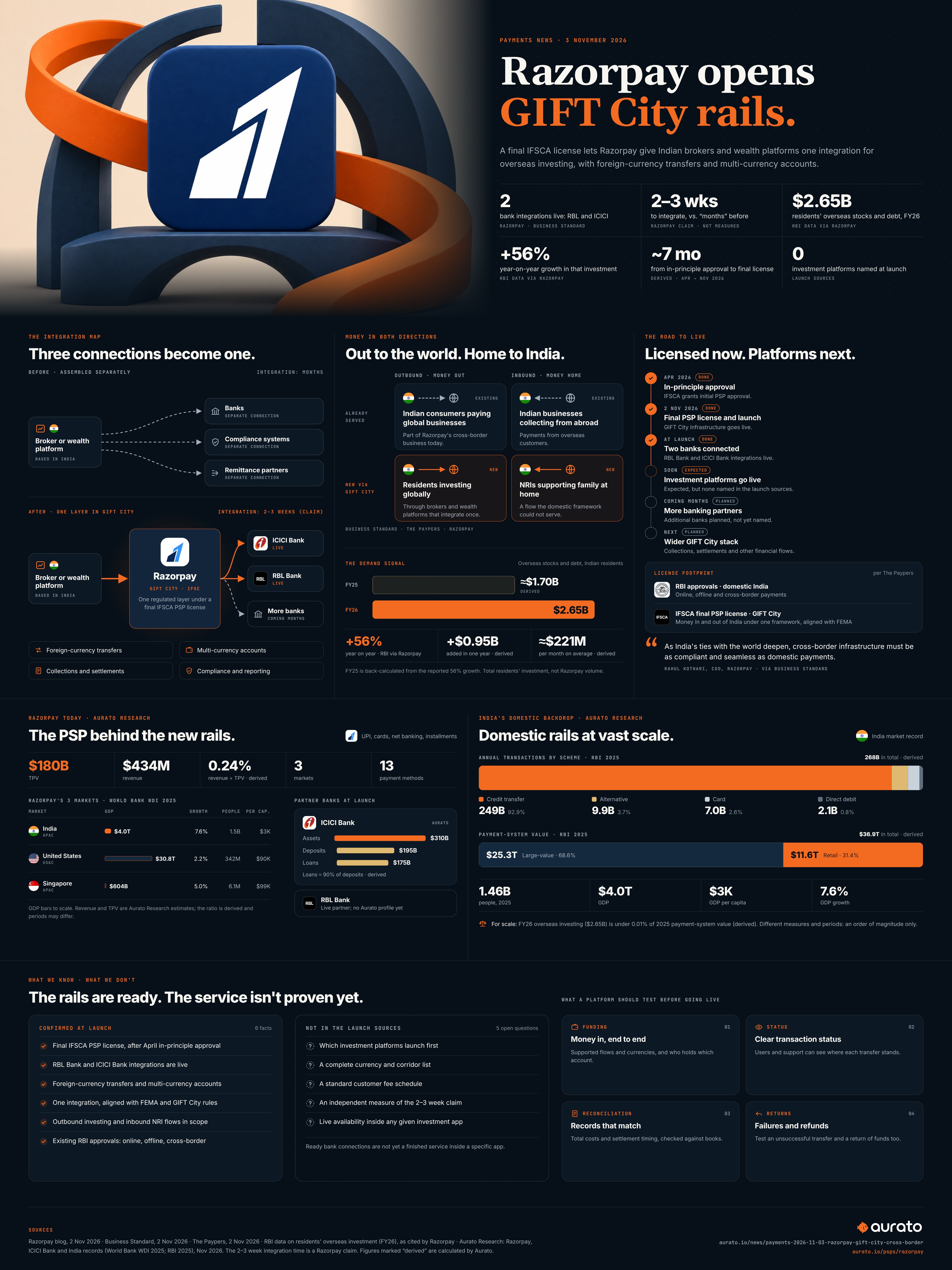
One connection for cross-border payment workflows
 Razorpay has launched GIFT City infrastructure for brokers and wealth platforms that want to offer overseas investing to residents of
 India. The company says its banking integrations with RBL Bank and
 ICICI Bank are live, with additional banking partners planned in the coming months.
Its final Payment Service Provider licence from the International Financial Services Centres Authority (IFSCA) follows an in-principle approval in April. Business Standard reports that the permission enables foreign-currency money movement and multi-currency accounts; investment platforms are expected to go live soon.
Less infrastructure to assemble separately
For a platform, the practical attraction is a common connection for functions that might otherwise require separate banking and remittance arrangements. That could reduce coordination work when adding a cross-border product, provided the integration covers the platform’s actual customer journey.
The important distinction is between having payment infrastructure available and having a finished customer service. Funding, transaction status, reconciliation and returning money all need to work together. A single integration does not by itself show that each of those steps is ready for every platform.
Readiness is not universal customer availability
The Paypers describes a single flow replacing separate connections to banks, compliance systems and remittance partners. Razorpay says an integration that previously took months can be completed in two to three weeks. That timetable is attributed to the company, rather than independently measured across customers.
The launch sources do not name the first investment platforms, publish a complete currency and corridor list, or give a standard customer fee schedule. Bank connections being ready should therefore be distinguished from confirmed availability within a particular investment app.
Check the complete funding and return journey
Platforms considering the service should confirm supported flows, currencies, account responsibilities, total costs and settlement timing. Testing should include an unsuccessful transfer and a return of funds as well as a successful payment, so the operational result can be compared with the existing process.