One authorisation, then automatic payments
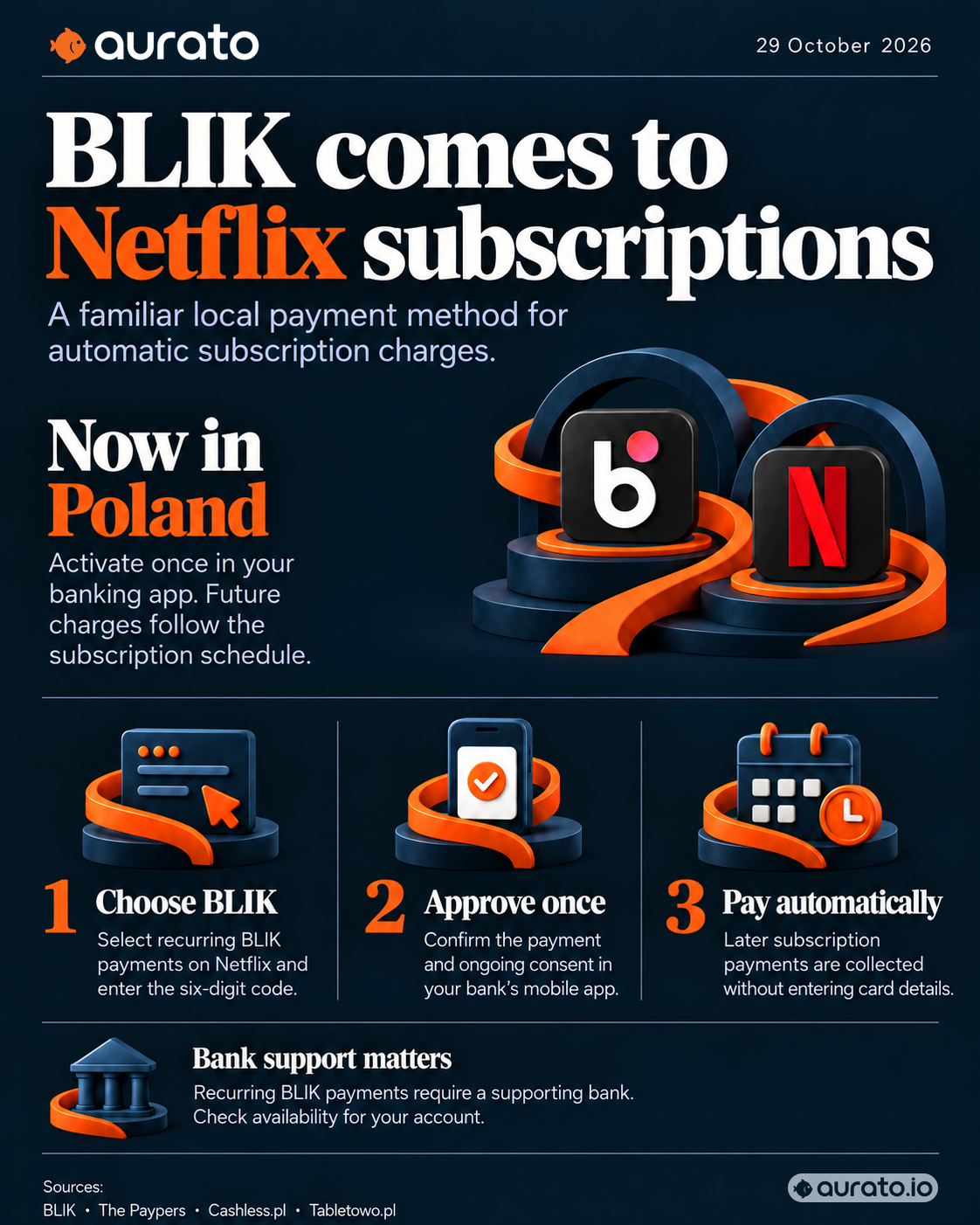
Netflix users in  Poland can pay for their subscription through
 BLIK Recurring Payments. At setup, the customer gives consent in their bank’s mobile app; later charges follow the subscription schedule without requiring payment card details. The service is live, rather than a future launch plan.
Cashless.pl describes the first payment: select the recurring BLIK option, enter a six-digit code and confirm the transaction in the banking app. BLIK’s operator,  Polski Standard Płatności, is extending an existing recurring-payment capability to Netflix, not launching a new payment method from scratch.
A local method enters the subscription flow
For subscribers who already use mobile banking, this puts a familiar approval step into a service they pay for repeatedly. It removes the need to enter card credentials for this option while keeping subsequent collection automatic. That is a practical change in how a customer can fund a subscription.
For merchants considering local payment methods, the example shows why recurring support matters alongside a successful first checkout. A one-off payment option does not by itself solve subscription billing: consent, repeat collection and a clear customer journey must work together.
Bank support still matters
Access to BLIK in a banking app should not be confused with support for every BLIK feature. Cashless.pl reports that recurring payments are supported by nine banks. Customers should therefore check whether their bank and Netflix account offer this specific option before trying to switch.
Tabletowo.pl reports that customers can withdraw their recurring-payment consent. The coverage does not establish a change to Netflix subscription prices or show measured improvements in retention or payment success from this deployment.
Check the agreement before switching
Subscribers should review the authorisation and billing schedule, and distinguish cancelling a payment consent from ending the underlying subscription. The useful next evidence will be how clearly setup, failed collections and payment-method changes work in everyday use, rather than claims of automatic commercial gains.