
One gateway behind local gaming payments
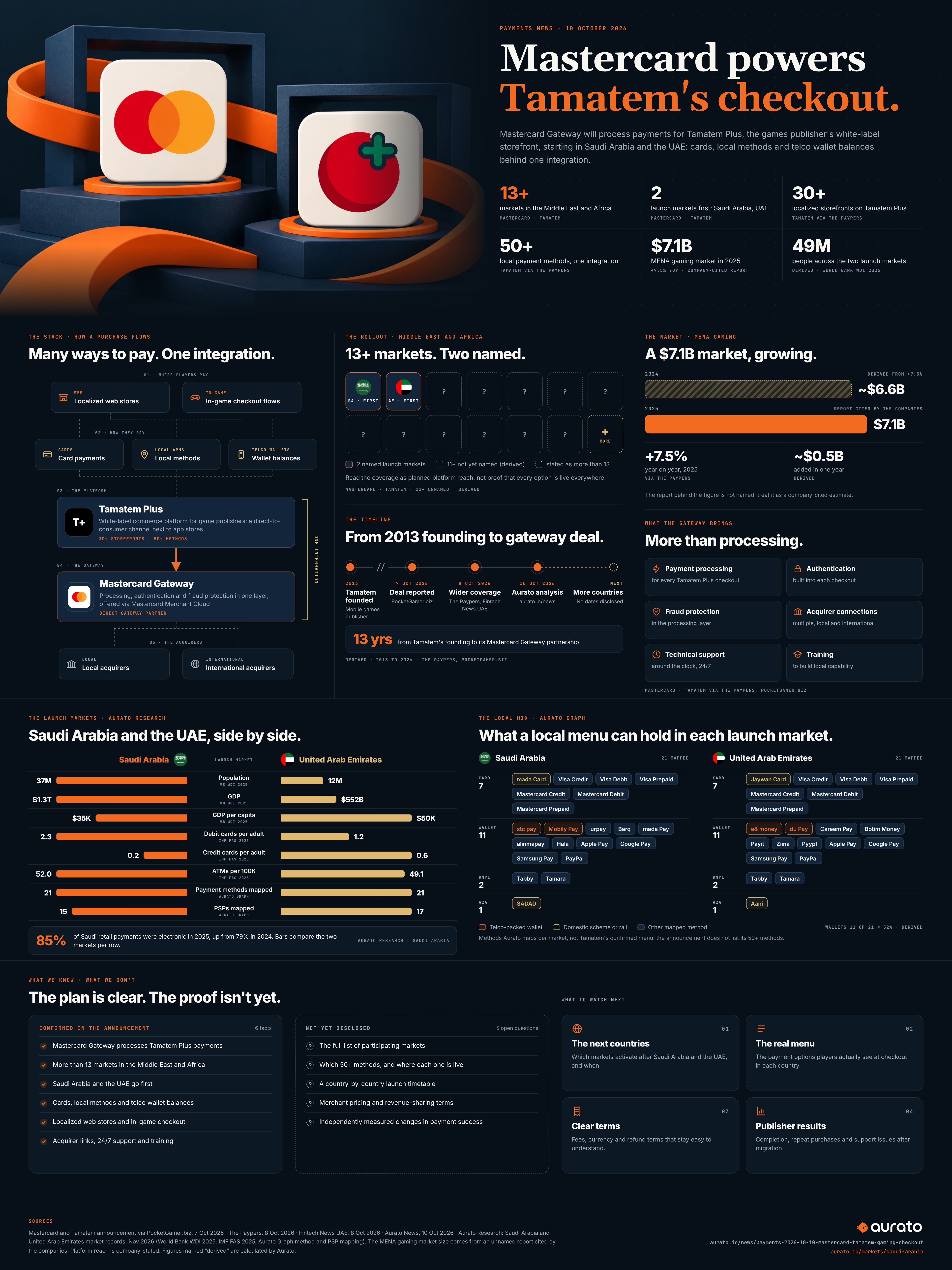
 Mastercard and mobile games publisher Tamatem have agreed a regional partnership. Mastercard Gateway will process payments for Tamatem Plus, its white-label commerce platform, across more than 13 Middle Eastern and African markets, starting with
 Saudi Arabia and the
 United Arab Emirates.
The checkout is designed to keep regional choice inside one integration. Players can pay through localised web stores and in-game flows using cards, local alternative payment methods and telco wallet balances. Authentication and fraud protection are built into the processing layer.
For game publishers, Tamatem Plus provides a direct-to-consumer sales channel rather than relying only on an app-store checkout. Mastercard says the platform operates more than 30 localised storefronts and offers access to over 50 local payment methods. The Gateway relationship also includes acquirer connections, technical support and training.
Why the local payment mix matters
A player may be willing to buy an in-game item but still abandon the purchase when the available payment option feels unfamiliar. Combining a regional storefront with cards, domestic methods and mobile-wallet balances can reduce that mismatch without requiring each publisher to build every connection itself.
A publisher-controlled checkout can offer local pricing and branding, creating a more direct relationship with players. Its value for customers still depends on clarity, reliability and refund handling, rather than simply the number of available methods.
What remains unspecified
The announcement does not name all participating markets, list the 50-plus payment methods or provide a country-by-country launch timetable. It also does not disclose merchant pricing, revenue-sharing terms or independently measured changes in payment success. The stated coverage should therefore be read as the planned platform reach, not proof that every option is live everywhere.
What to watch next
Watch for the next activated countries and the actual payment menu presented to players in each one. A useful rollout should make a locally trusted option easy to recognise while keeping fees, currency and refund terms understandable.
Publisher reports on payment completion, repeat purchases and support issues after migration would show whether the shared gateway simplifies expansion or mainly consolidates the technology behind checkout.
Related
Sources
- Mastercard and Tamatem Level Up Gaming Payments in Middle East and AfricaMastercard
- Mastercard and Tamatem partner on gaming payments in the Middle EastThe Paypers
- Mastercard and Tamatem partner on gaming payments across MENA and AfricaPocketGamer.biz
- Mastercard Gateway to Power Gaming Payments for Tamatem PlusFintech News UAE