What changes at checkout
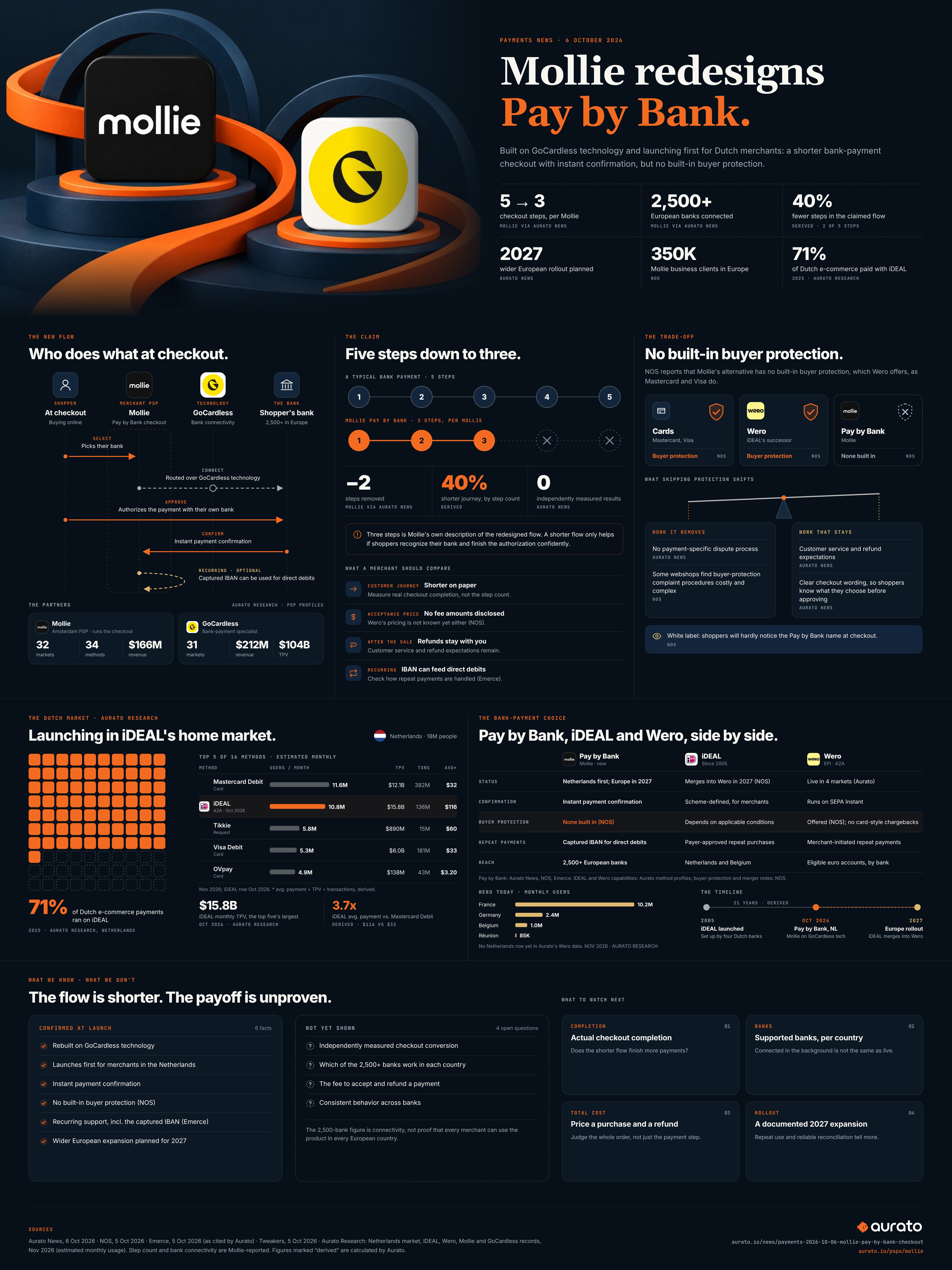
 Mollie has rebuilt Pay by Bank around
 GoCardless technology, with connectivity to more than 2,500 European banks. The redesigned service offers instant payment confirmation and a shorter customer journey. The launch starts in the
 Netherlands; wider European expansion is planned for 2027.
The service presents a familiar merchant decision: which bank-payment option to offer as  iDEAL moves toward
 Wero. NOS reports that Mollie’s alternative has no built-in buyer protection. Emerce also highlights recurring-payment support, including using the captured IBAN for direct debits.
Why merchants should care
Another bank-payment option gives a retailer something concrete to compare: the customer journey, acceptance price and work needed after the sale. A shorter payment flow could help, but only if customers recognise their bank and finish the authorisation confidently.
The buyer-protection distinction deserves clear wording at checkout. Customers should understand the payment they are choosing before they approve it. For a merchant, avoiding a payment-specific dispute process can reduce one kind of work while leaving customer service and refund expectations to manage.
What the announcement does not prove
Three steps is Mollie’s description of its redesigned flow, not an independently measured conversion result. Its bank-connectivity figure also should not be read as confirmation that every merchant can already use the product in every European country.
What to watch next
Watch actual checkout completion, supported banks and the total cost of accepting and refunding a payment. Merchants will need those details to judge whether an additional option improves their payment mix or merely adds another button.
The strongest next milestone would be a broader, clearly documented rollout with consistent behaviour across banks. Repeat customer use and reliable reconciliation would tell us more than the number of banks connected in the background. The comparison should cover a completed purchase and a refund, so an easier payment step is not assessed separately from the rest of the order.