

The news
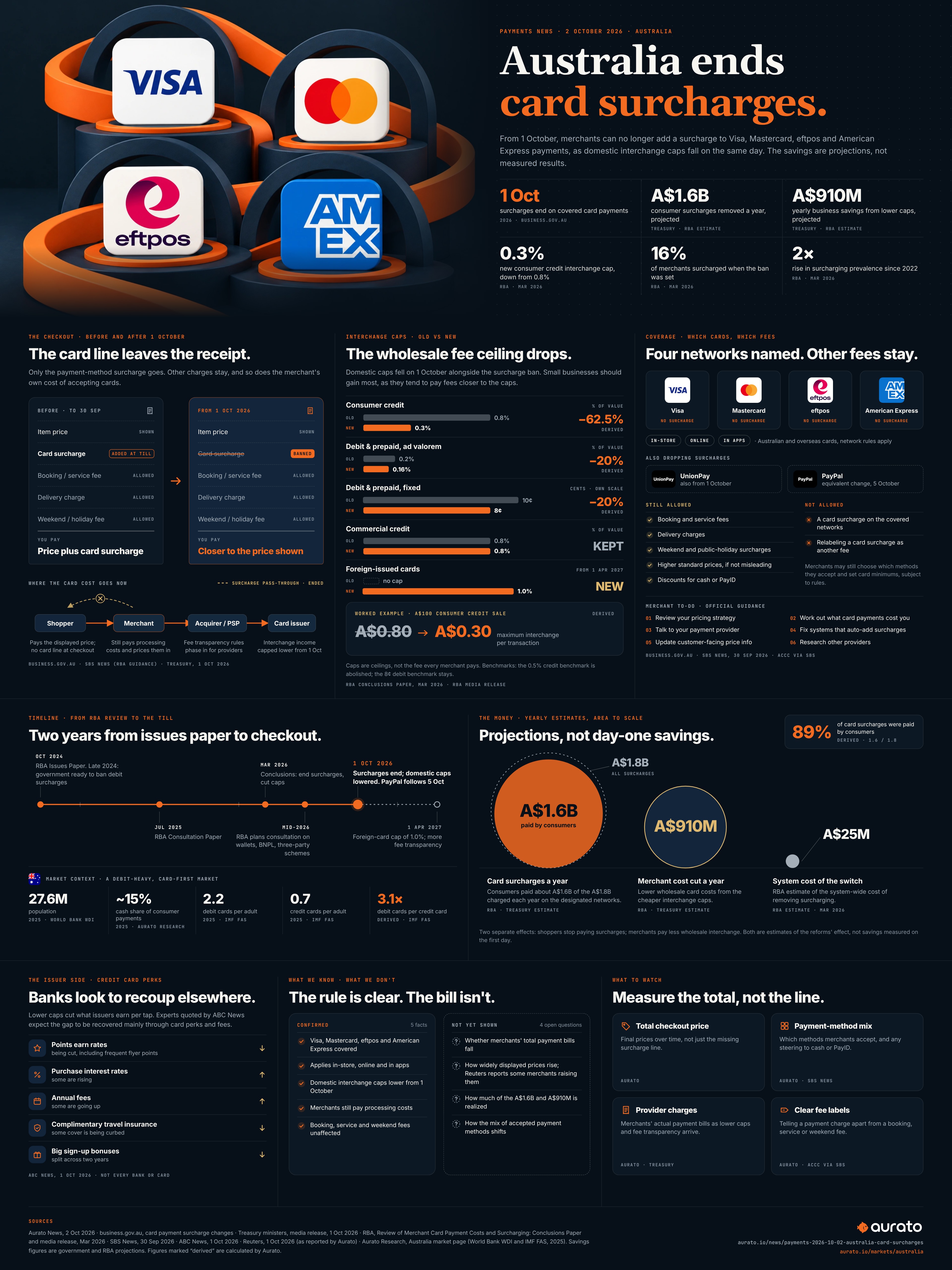
The change reached Australian checkouts on 1 October. Official business guidance says businesses can no longer add a surcharge to the covered card payments. It names  Visa,
 Mastercard,
 eftpos and
 American Express, and tells merchants to update payment processes and customer pricing information.
Treasury presented the implementation alongside lower domestic interchange caps. The government estimates the reforms will remove A$1.6 billion in annual consumer surcharges and save businesses A$910 million a year. These are projections of the reforms’ effect, rather than measured savings realised on the first day.
Why it matters
The immediate customer benefit is easier comparison: the displayed price can be closer to the price paid with a card. That matters most at the last moment of checkout, when an unexpected extra charge can feel more irritating than its size suggests.
For merchants and PSPs, the commercial question shifts to how acceptance costs are priced and recovered. A cleaner receipt is useful, but it does not by itself reveal whether a merchant’s overall payment bill has fallen. The customer experience and the merchant economics need to be assessed separately.
What remains limited
The rules target card-payment surcharges. The official guidance says unrelated booking, service, weekend and public-holiday charges are unaffected. It also makes clear that merchants still pay processing costs. Removing a separate card charge does not mean every payment service becomes free.
Reuters’ implementation-day reporting describes businesses responding with higher prices or plans to raise them. That is evidence of particular merchant reactions, not proof of a uniform national price increase.
What to watch
Watch the total checkout price, the mix of accepted payment methods and merchants’ actual provider charges. A useful assessment would compare those measures over time, rather than treating a missing surcharge line as the whole outcome.
Shoppers should also be able to distinguish a payment-method charge from another fee. Clear labels and consistent pricing will determine whether the reform produces a simpler everyday payment experience.
Related
Sources
- New card payment surcharge rules now applybusiness.gov.au
- Credit and debit card surcharges end todayAustralian Treasury
- Australian businesses raise prices as card surcharge ban takes effectReuters