What is being connected
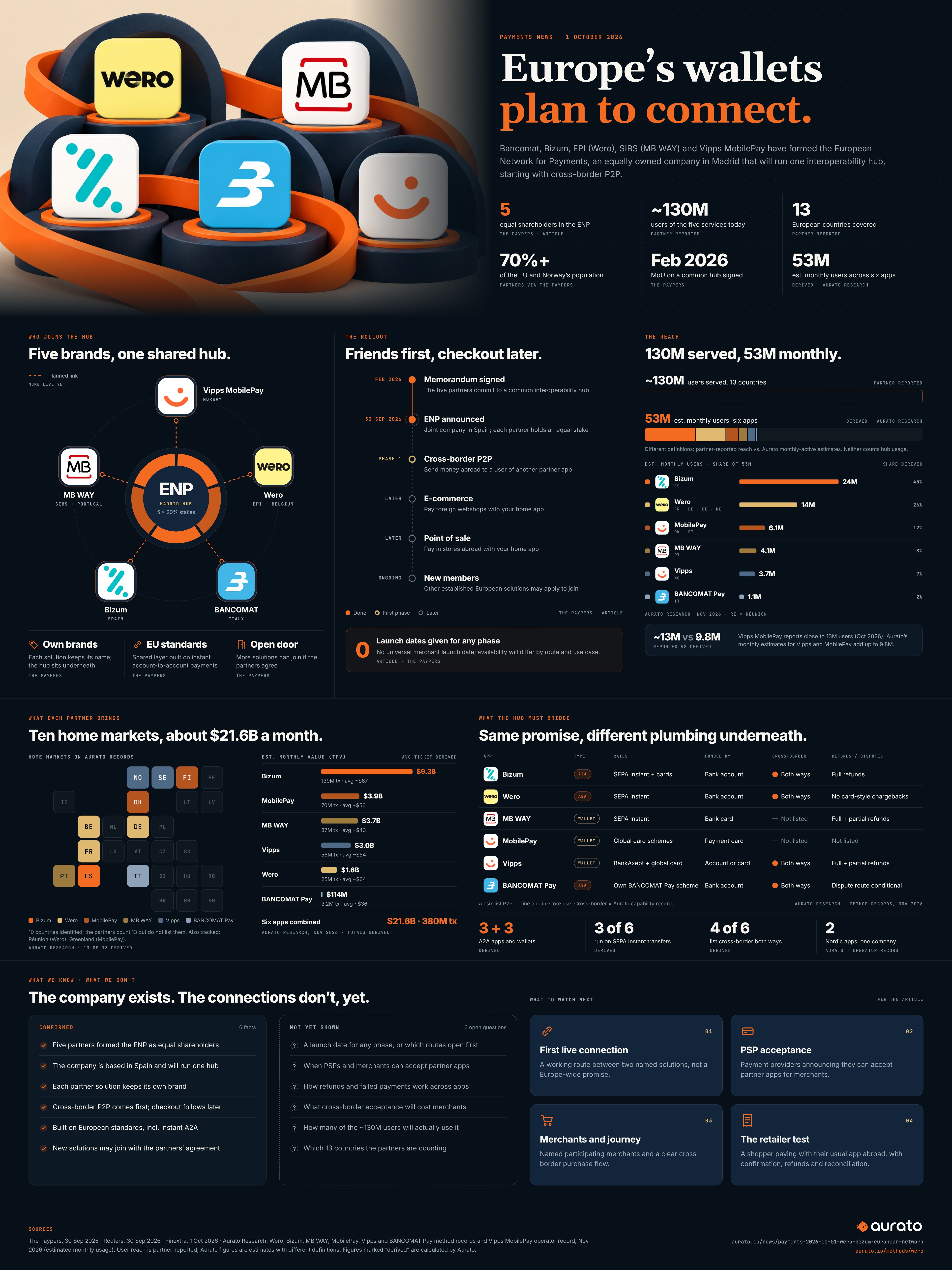
The partners have created a joint entity to connect their existing payment solutions. The Madrid-based entity will operate a common interoperability hub. The five partners are equal shareholders.
Their existing solutions collectively serve around 130 million users across 13 European countries. This is the partners’ existing reach, rather than users already transacting through the new hub.
Why the checkout angle matters
The attractive proposition is continuity: a customer could keep a familiar payment app when crossing a border. For merchants, the question becomes whether a local method can serve more visiting and international customers through a practical acceptance connection.
The brands matter here. This approach aims to connect established consumer habits, so merchant communication and payment selection could remain recognisable. Success would depend on what a shopper can actually do in a specific country and at a specific checkout.
Where the announcement stops
The planned rollout begins with peer-to-peer payments. E-commerce and point-of-sale are later phases; the announcement does not provide a universal merchant launch date.
What to watch next
Watch the first live connections between two named solutions. After that, look for PSP acceptance announcements, participating merchants and the customer journey for cross-border purchases.
For a retailer, a credible milestone would be a customer using their usual app abroad, with clear confirmation, refund handling and reconciliation. A large combined user base offers potential distribution; it does not yet demonstrate how often those customers will choose the connected method.
An interoperability hub will need to make differences between the participating services manageable for customers and merchants. Availability should be explained for each route and use case, rather than as a single Europe-wide promise. A clear way to confirm receipt, handle a refund and resolve a failed payment would make the first connections easier to assess.