The shop counter gains an online counterpart
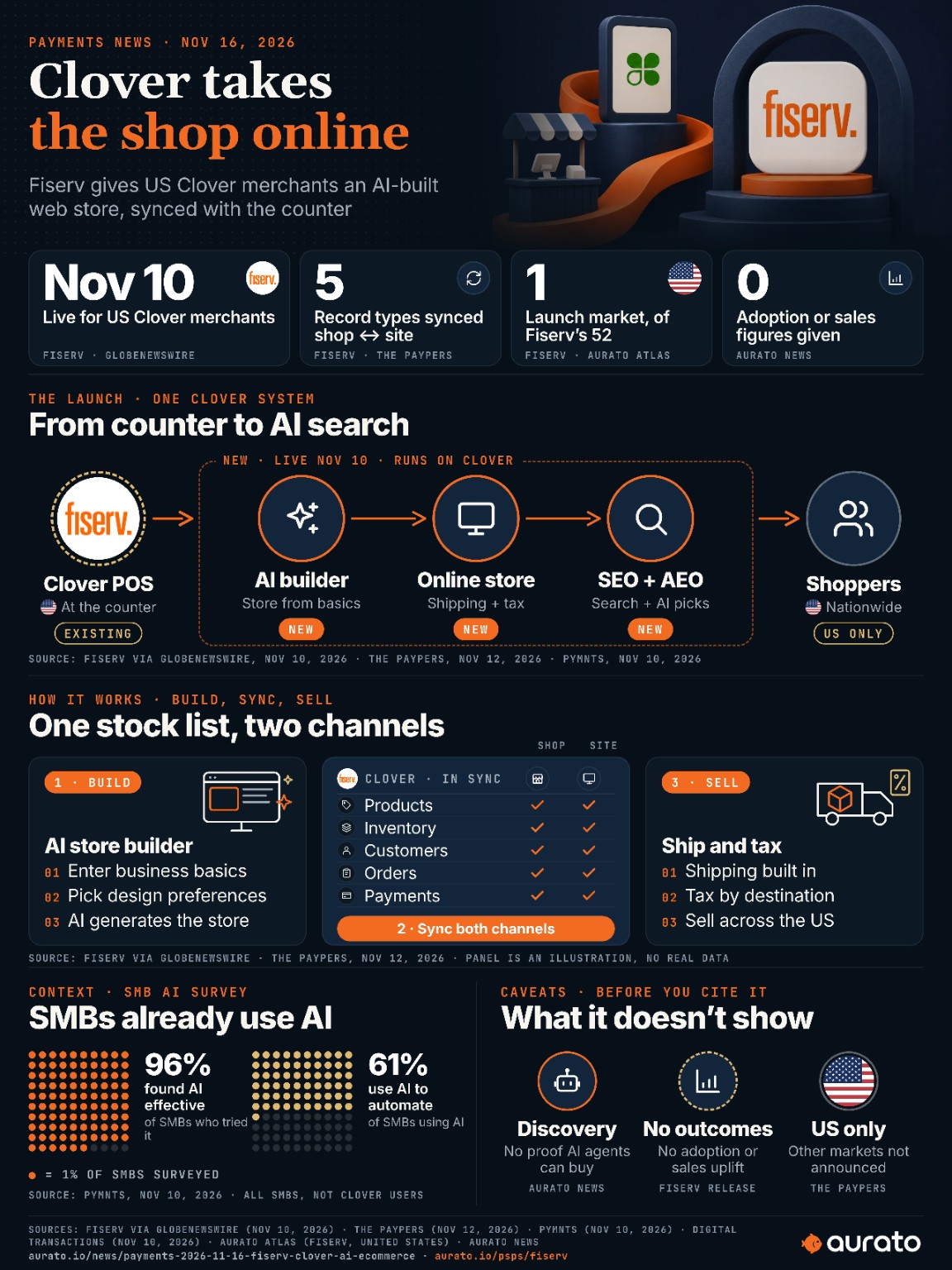
 Fiserv has added ecommerce capabilities to its Clover platform for merchants in the
 United States. An AI website builder uses a business’s basic details and design preferences to generate an online store. The release targets small businesses with limited online presence and connects the new storefront to their existing Clover operations.
Products, inventory, customers, orders and payments are synchronised across the physical and online business. Built-in shipping and destination-based tax calculation support selling nationwide. The announcement describes these capabilities as available to US Clover merchants; it does not establish availability in other countries.
Being found is a separate part of the checkout
Search engine optimisation and answer engine optimisation tools are intended to make products easier to find in conventional search results and AI shopping recommendations. That is a discovery function. It is not evidence that an AI agent can independently authorise purchases, or that merchants will receive a guaranteed position in a recommendation.
One stock position across two sales channels
A connected inventory could reduce the work of keeping a shop and website in step. For a small retailer, the practical benefit would be less duplicated entry and fewer cases where a product appears available online after it has sold at the counter. That depends on how reliably the connection works during normal trading, rather than how quickly a first website can be generated.
Payments also need to follow the order through both channels. A useful evaluation would track completed purchases alongside stock accuracy and the work needed to handle changes. Website creation is only the start of running a store; a merchant still needs an operating process that remains understandable when an order does not go as expected.
Available tools, with outcomes still to measure
The launch material does not give adoption figures, a measured sales uplift or before-and-after payment completion rates. Its promise of faster setup should therefore remain separate from evidence of ongoing commercial performance. A useful next comparison is whether merchants can turn additional product discovery into fulfilled, paid orders without increasing manual work.