
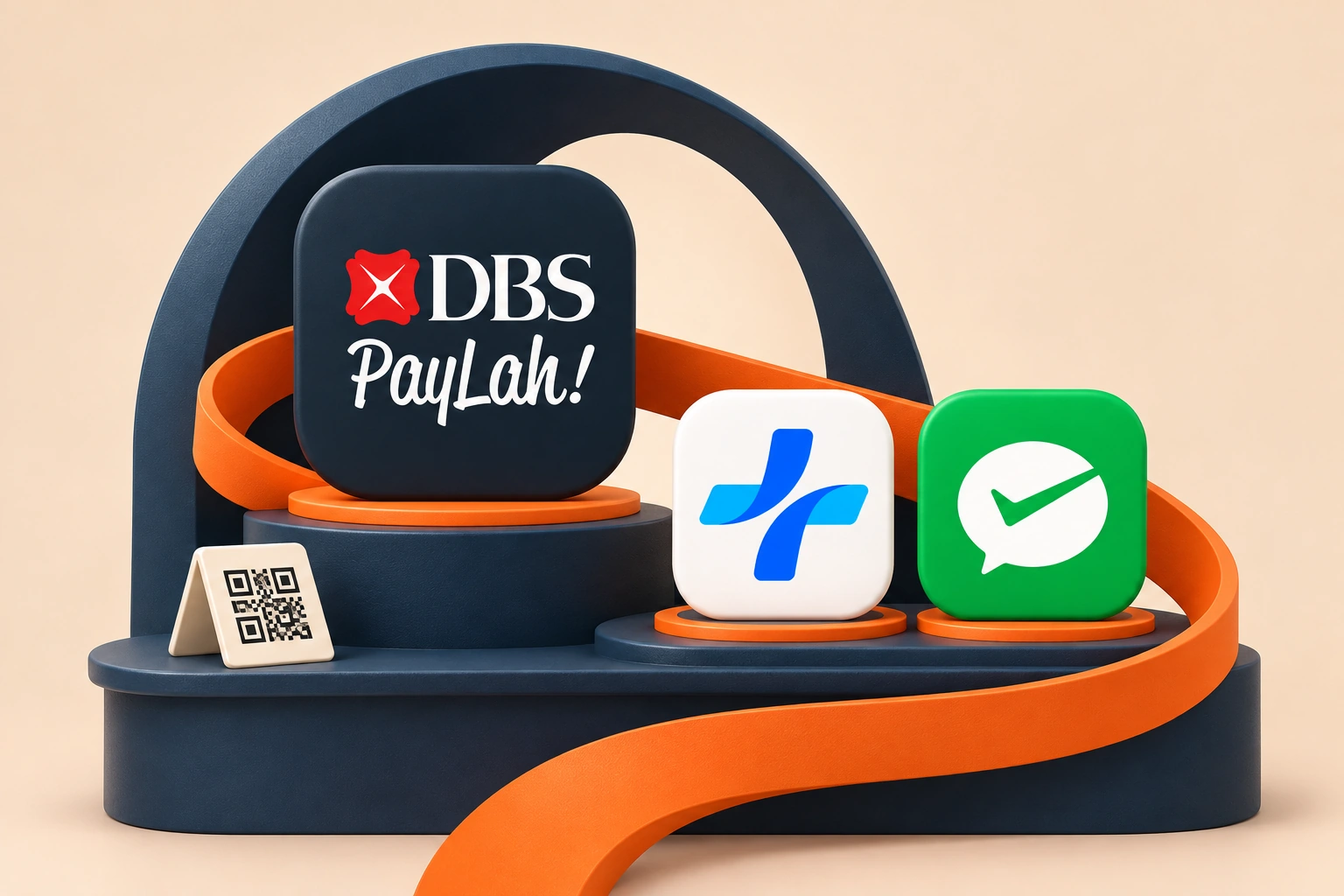
One wallet, two ways to pay
 DBS PayLah! users can now scan merchant QR codes or present their own for a cashier to scan through
 Alipay+ and
 Weixin Pay in mainland
 China.
 DBS enabled the expansion through
 Ant International and TenPay Global.
 UnionPay QR connectivity was already available, so this is an addition to the wallet’s existing overseas acceptance.
Review the amount before confirming
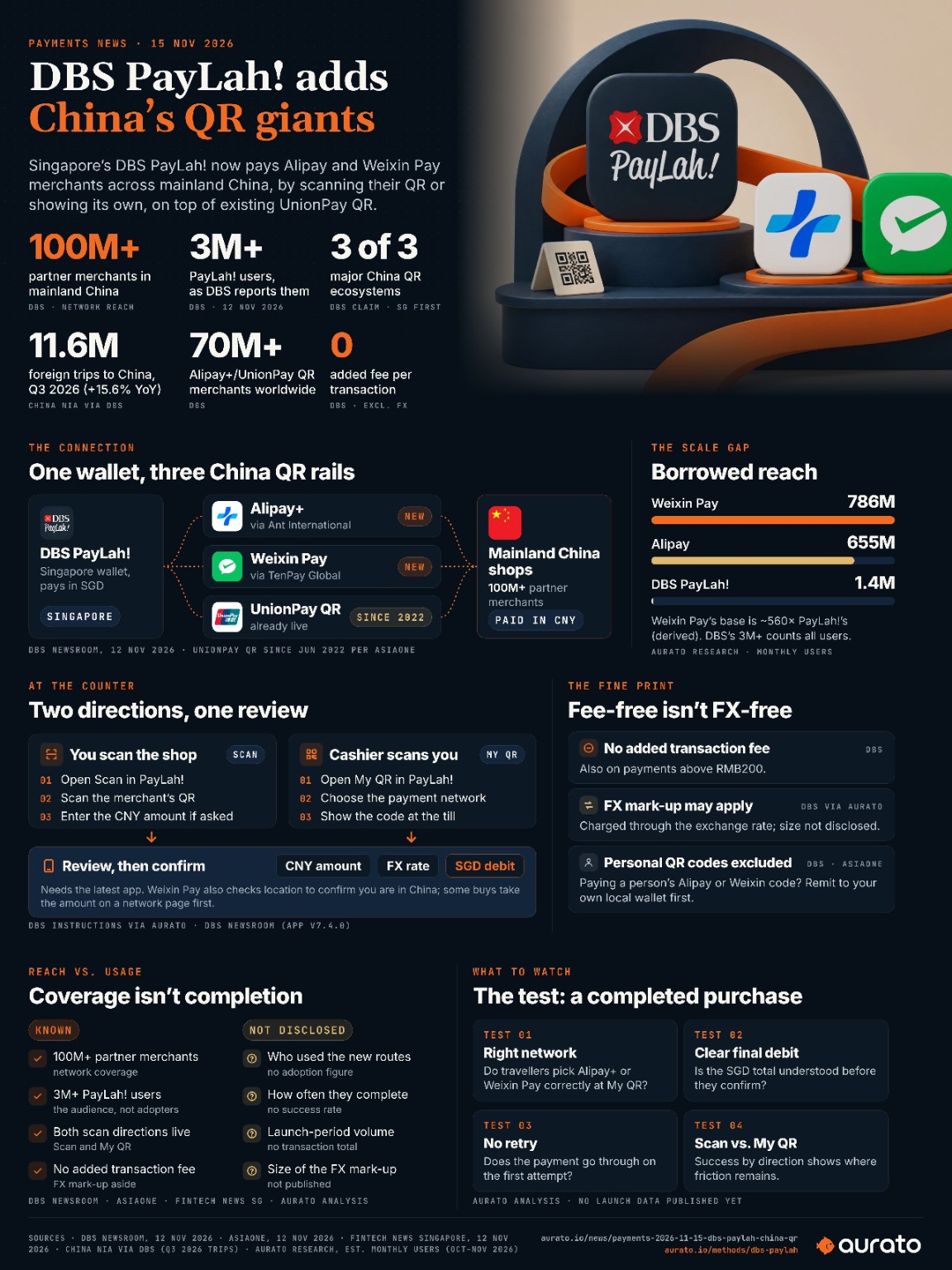
The bank’s instructions describe two routes. Open Scan to read a merchant’s code, entering the amount if needed; or open My QR, choose the payment network and show the code. Both routes return a review of the  Chinese yuan amount, exchange rate and
 Singapore dollar debit. Users need the latest app; Weixin Pay also requires location services to verify they are in China.
There is no additional transaction fee, including above RMB200. That does not mean currency conversion is free: DBS says an exchange-rate mark-up may apply. For some Weixin Pay purchases, a network page collects the amount before returning the customer to PayLah! to review and authorise it.
Merchant reach is not a usage result
DBS reports more than three million PayLah! users and access to over 100 million partner merchants across mainland China. Those figures describe the wallet’s audience and network coverage. They do not measure how many people have used the new routes, or how often payments complete. Neither the announcement nor the reporting gives a launch-period transaction total.
The new routes cover participating merchant QR codes. Paying an individual or a small business using a personal  Alipay or Weixin Pay code is a different case: DBS points customers to remitting funds into their own local wallet. The merchant rollout does not establish universal acceptance of every QR code.
The useful test is a completed purchase
A familiar wallet could reduce the setup needed for a trip, but the counter experience remains decisive. Track whether travellers choose the right network, understand the final debit and complete payment without a retry. Comparing success by scan direction would show where either route still causes friction. Coverage alone cannot answer those questions.
Related
Sources
- DBS PayLah! connects users to over 100 million Alipay+ and Weixin Pay merchants across ChinaDBS
- Travelling to China? DBS PayLah users can pay with QR at Alipay, WeChat merchantsAsiaOne
- DBS First Singapore Bank to Support China’s Three Major QR PaymentsFintech News Singapore
- Scan to pay in China with DBS PayLah!DBS