An agent can pay, with the buyer’s approval
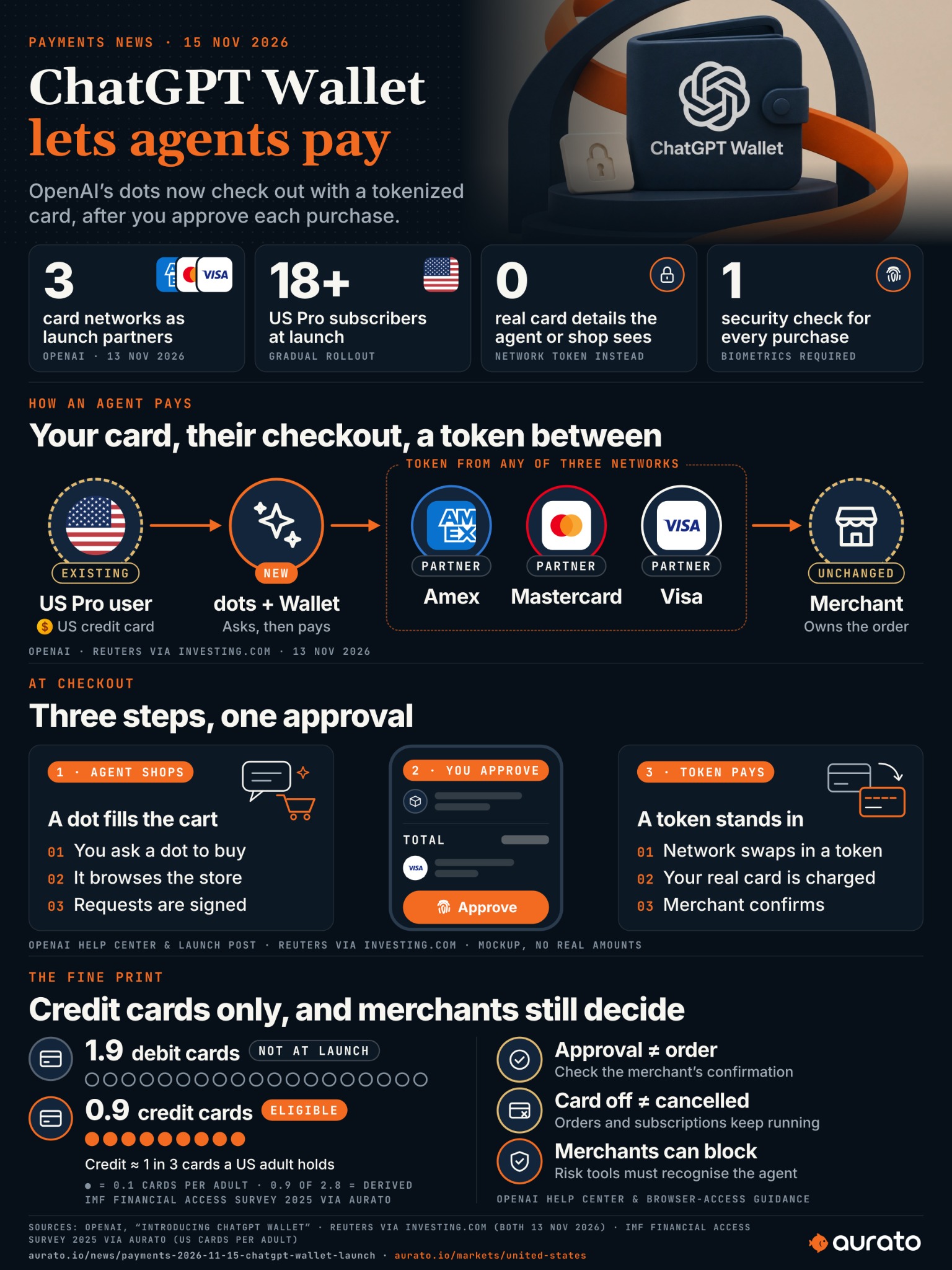
ChatGPT Wallet adds payments to dots, OpenAI’s agents. Users choose a card and review the items and total before a security check.  American Express,
 Mastercard and
 Visa are the network partners. OpenAI describes a gradual rollout, rather than immediate access for every eligible account.
The card stays behind a payment token
After approval, the network supplies a substitute credential with a card number, security code and expiry. The underlying card is charged, while its actual details stay out of the agent’s and merchant’s checkout. OpenAI says existing rewards and protections for eligible disputes continue. The merchant keeps responsibility for pricing, fulfilment, returns and customer service.
A limited US launch through dots
Access starts with Pro subscribers aged 18 or older in the  United States with eligible US-issued credit cards and a US billing address. Wallet works in dot conversations, rather than ordinary Chat, Work or standalone Codex threads. Debit cards and added virtual cards are unsupported at launch. Purchase approval requires biometrics on a supported device.
Approval is separate from order completion. The Help Center says to check the merchant’s confirmation if checkout is unclear. It also notes that recurring plans may allow later merchant charges under the agreed terms. Removing a saved card does not cancel an order or a subscription.
Acceptance also depends on the merchant
OpenAI’s browser-access guidance describes signed requests that websites can verify using Web Bot Auth. A direct product feed or plugin is not required for browser access. The launch announcement also calls on merchants to work with payment and risk providers so legitimate agent purchases are recognised, rather than blocked or declined.
The practical test is a completed order
For payments, the interesting shift is who operates checkout while the buyer retains approval. A useful assessment would follow each attempt from permission through authorisation to a confirmed order, then include cancellations and disputes. That would show whether agent checkout saves effort without increasing retries or support work. Early availability alone cannot establish that result.
Related
Sources
- Introducing ChatGPT WalletOpenAI
- Making purchases with ChatGPT WalletOpenAI Help Center
- OpenAI launches ChatGPT Wallet, letting AI agents pay for purchasesReuters via Investing.com
- Help ensure cloud browser access to your siteOpenAI Developers