A third network for SoFi’s digital dollar
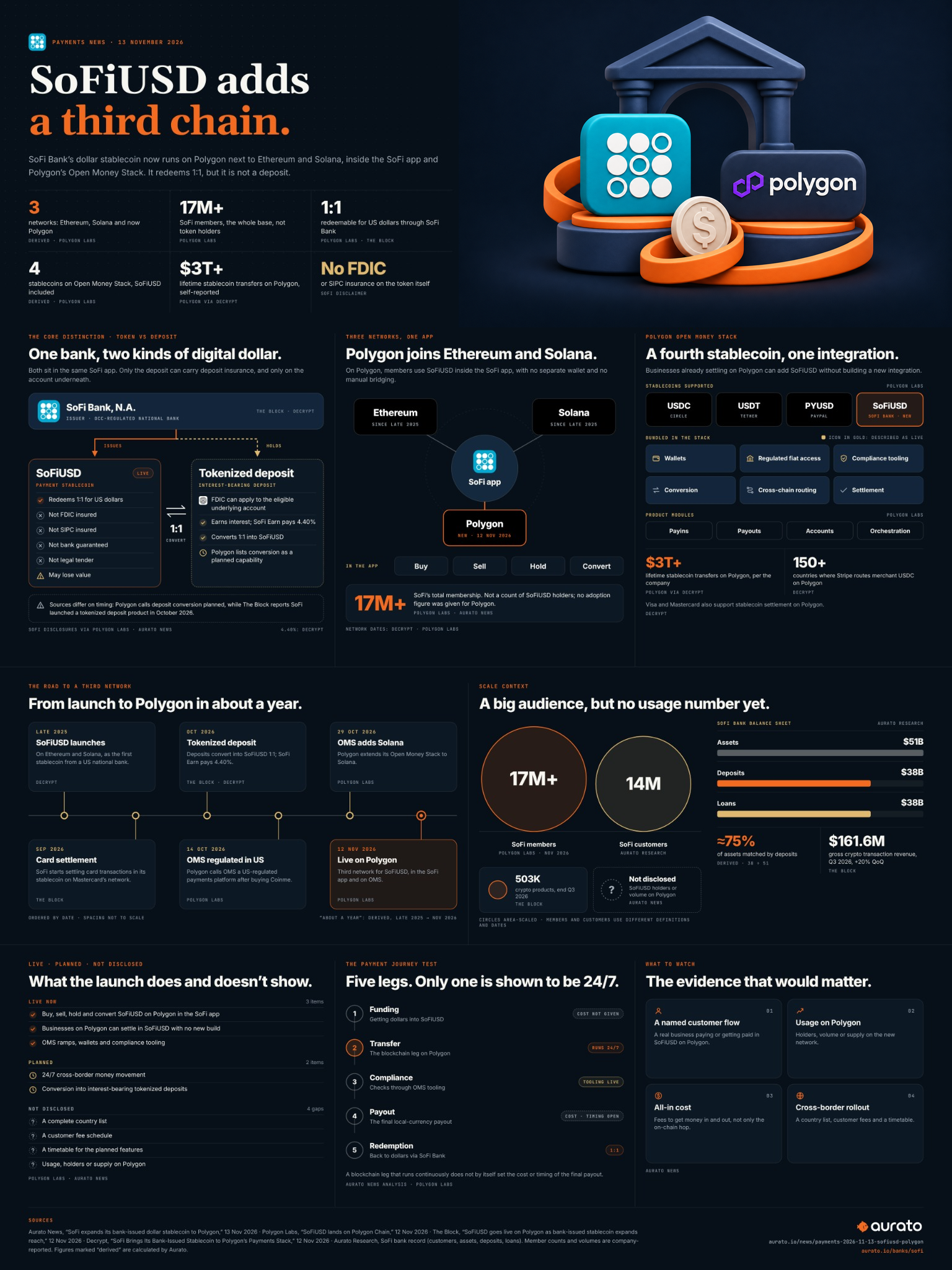
 SoFi has expanded SoFiUSD to Polygon, alongside its existing Ethereum and Solana support. Members can buy, sell, hold and convert the bank-issued stablecoin in the SoFi app. The integration adds a network for moving and settling digital dollars without requiring a separate wallet.
Polygon puts SoFi’s total membership at more than 17 million. That is the bank’s wider audience, rather than a count of SoFiUSD holders or people using the token on Polygon. The launch provides no measured adoption figure for this new network.
A settlement asset inside a wider payments stack
Polygon Open Money Stack combines wallets, fiat access, compliance tooling, conversion, routing and settlement. SoFiUSD joins other supported stablecoins there. Polygon says businesses already settling on its infrastructure can add SoFiUSD without building a new integration.
Separate the token from the deposit
SoFi Bank issues SoFiUSD with one-to-one dollar redemption. Its bank charter does not make the token an insured deposit: SoFi’s disclosures say the stablecoin is not covered by  FDIC or SIPC insurance, is not bank guaranteed and may lose value. The legal distinction matters even when both products appear in one app.
Polygon describes round-the-clock cross-border transfers and conversion into interest-bearing tokenized deposits as further planned capabilities. Any deposit insurance would apply to an eligible underlying deposit account, not to SoFiUSD itself. The release does not provide a complete country list, customer fee schedule or timetable for those features.
Availability is the start of the payment journey
For payment providers, another bank-issued asset creates a potential settlement choice within existing infrastructure. The useful test is the complete flow: funding, transfer, compliance checks, payout and redemption. A blockchain leg that runs continuously does not by itself establish the cost or timing of the final local-currency payout.
The next evidence to look for is a named customer payment flow, actual usage and the total cost of getting money in and out. Those would show whether the added network makes everyday payments easier, beyond giving members another place to hold a digital dollar.
Related
Sources
- SoFiUSD lands on Polygon Chain, bringing America's first bank-issued stablecoin to everyday usePolygon
- SoFiUSD goes live on Polygon as bank-issued stablecoin expands reachThe Block
- SoFi Brings Its Bank-Issued Stablecoin to Polygon’s Payments StackDecrypt
- SoFiUSD Becomes the First Stablecoin Issued by a US National Bank to Launch on a Banking PlatformSoFi