Payment tools reach smaller tourism businesses
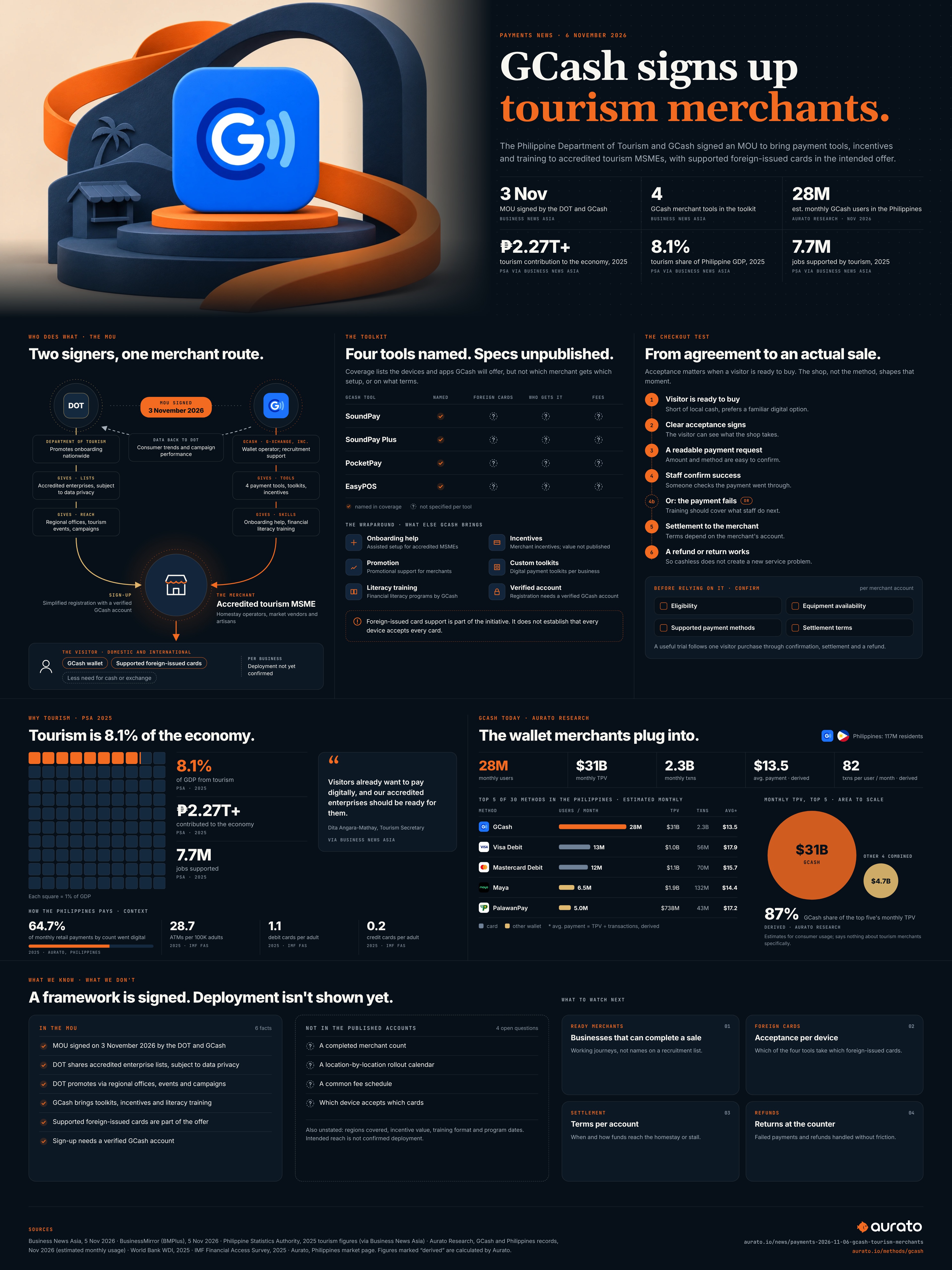
 GCash and the Department of Tourism have agreed to support digital payment acceptance among accredited micro, small and medium enterprises in the
 Philippines. The programme runs through wallet operator
 G-Xchange, Inc. and aims to help businesses serve domestic and international visitors.
The tourism department will promote merchant onboarding through its regional offices, events and campaigns. GCash will provide payment toolkits, incentives and financial literacy training, alongside recruitment support for participating businesses.
A payment option needs a working checkout
For a small tourism business, acceptance matters when a visitor is ready to buy. A familiar digital option could help a homestay or market stall serve a customer who is short of local cash. Combining equipment with onboarding and staff guidance gives the programme a practical route from an agreement to an actual sale.
The customer experience still depends on the shop. Clear acceptance signs, a readable payment request and staff who can confirm a successful transaction are as important as the method itself. Training should also cover failed payments and returns, so a cashless purchase does not create a new service problem.
Supported cards do not mean universal acceptance
The planned tools include GCash SoundPay, SoundPay Plus, PocketPay and EasyPOS. Coverage describes support for foreign-issued cards as part of the initiative; it does not establish that every listed device accepts every card or that each merchant will receive the same setup.
The published accounts do not give a completed merchant count, a location-by-location rollout calendar or a common fee schedule. The memorandum establishes a framework for onboarding and promotion. Its intended reach should therefore be kept separate from confirmed deployment at an individual business.
Check the setup before relying on it
Merchants should confirm eligibility, equipment availability, supported payment methods and settlement terms for their account. A useful trial follows a visitor purchase through confirmation, settlement and a refund. The next meaningful evidence is how many businesses can reliably complete those journeys, rather than how many appear on a recruitment list.