Device unlock joins the payment flow
 Checkout.com has activated
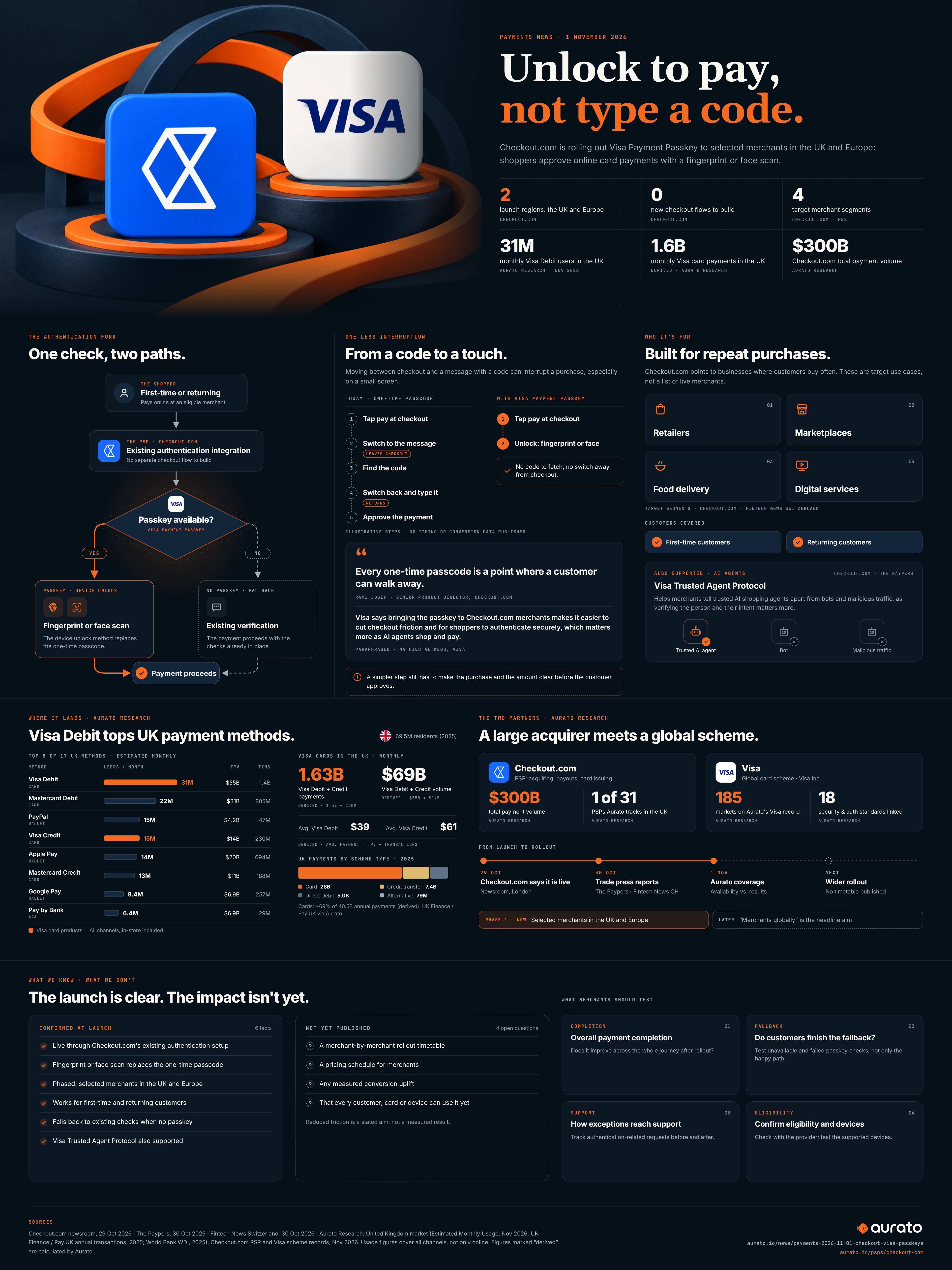
 Visa Payment Passkey through the authentication infrastructure its merchants already use. Cardholders can verify a purchase with their device unlock method instead of entering a one-time passcode. Eligible businesses do not need to build a separate checkout flow.
The rollout starts with selected merchants in the  United Kingdom and Europe. It supports first-time and returning customers; when passkey authentication is unavailable, the payment proceeds with existing verification methods. This is a phased deployment rather than a switch for every merchant.
One less interruption at checkout
For shoppers, moving between a checkout and a message containing a code can interrupt a purchase. Using a familiar device check could make that step easier, particularly on a small screen. A simpler interaction still needs to make the purchase and the amount clear before the customer approves.
For merchants, using an existing integration could reduce the work needed to test another authentication option. The useful comparison is the complete payment journey: completion rates, fallback behaviour and support requests, rather than the speed of the biometric check alone.
Availability and results need separate checks
Fintech News Switzerland reports that the service is relevant to frequent-purchase businesses, including retail, marketplaces, food delivery and digital services. These are target use cases, not a disclosed list of merchants already processing payments with the new method.
The launch material does not publish a merchant-by-merchant rollout timetable, pricing schedule or measured conversion uplift. Reduced friction is a stated aim. It should not be read as proof that every customer, card or device can already use the service.
Test the fallback as carefully as the passkey
Businesses considering activation should confirm eligibility with their provider and test supported devices alongside unsuccessful or unavailable passkey checks. Track whether customers complete the fallback flow, how exceptions reach support and whether overall payment completion improves after rollout.