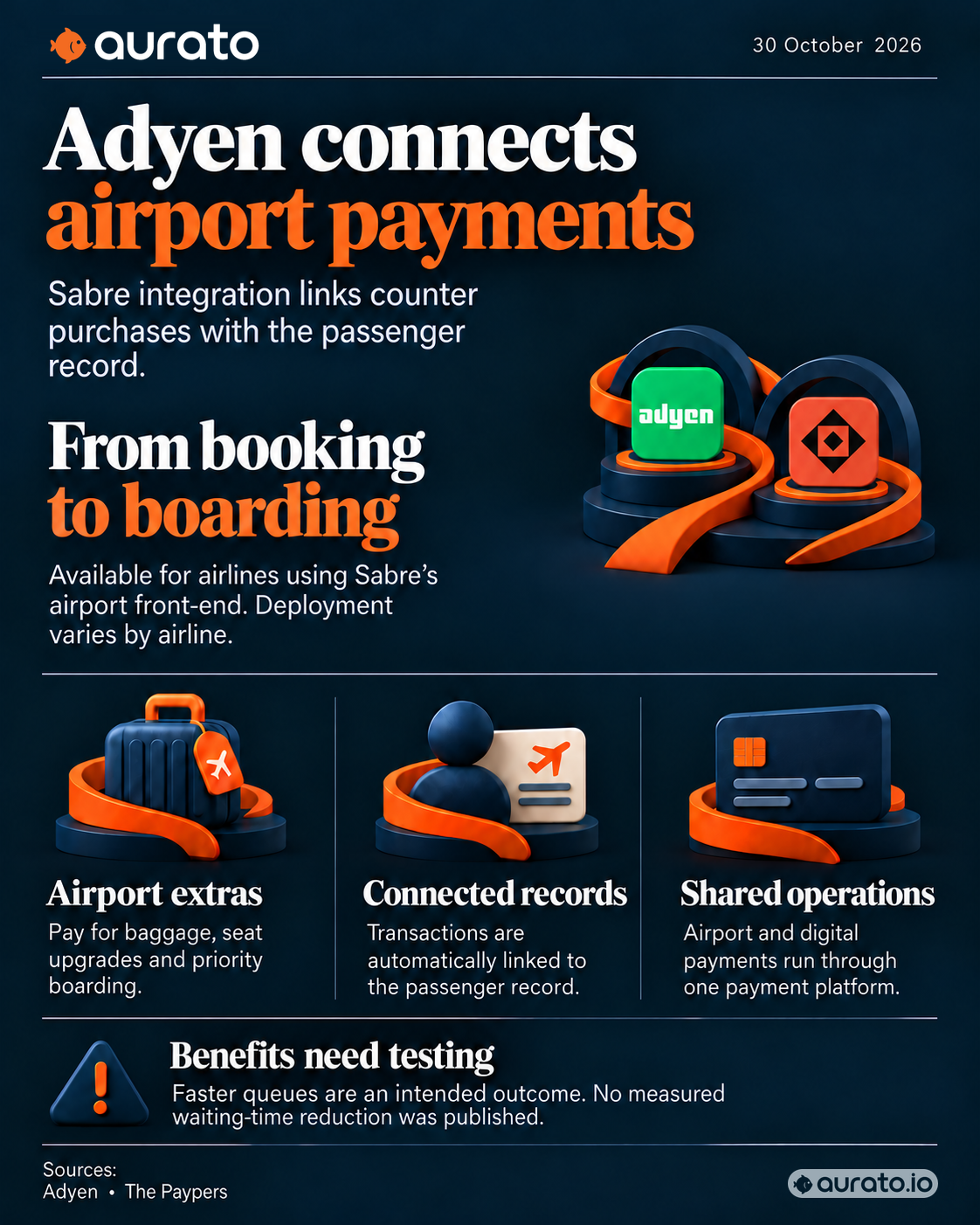
Airport purchases join the passenger record
 Adyen’s Terminal API is being integrated through the Sabre Electronic Payment Gateway into Sabre Mosaic Digital Workspace Air. The companies say the solution is available to airlines using Sabre’s airport front-end, connecting in-person payments with their digital payment operations.
Staff can process purchases for extra baggage, seat upgrades and priority boarding within the Sabre workflow. Transactions are automatically associated with the passenger record, while supported contactless cards and digital wallets give travellers more ways to pay at the point of departure.
Less separation between channels
A traveller may book online but still buy something at check-in or the gate. Linking that later payment to the passenger record could make it easier for staff to identify what was bought and for finance teams to reconcile the resulting revenue. The benefit depends on the complete operational flow, rather than simply installing a new terminal.
For airlines, a shared payment platform could reduce the need to match separate airport and online reports. That makes the integration relevant to both customer service and back-office work, although it does not remove the need to test refunds, exceptions and the handling of disrupted journeys.
Availability is not universal deployment
The announcement describes a solution for airlines using the relevant Sabre airport application. It does not provide a list of participating airlines, enabled airports, merchant prices or a full deployment timetable. Availability of the integration should therefore be distinguished from confirmed use at a particular counter.
The companies expect faster payments to help shorten queues and improve visibility across channels. Their published account does not include a measured reduction in waiting time or a before-and-after study of this deployment, so those operational gains remain claims to assess in practice.
Test the whole airport journey
Airlines evaluating the integration should confirm supported markets and payment methods, terminal connectivity, settlement reporting and how refunds return to the original transaction. A useful pilot would check both a routine baggage purchase and the exceptions staff encounter when a journey changes.