Payment choices move into the invoice
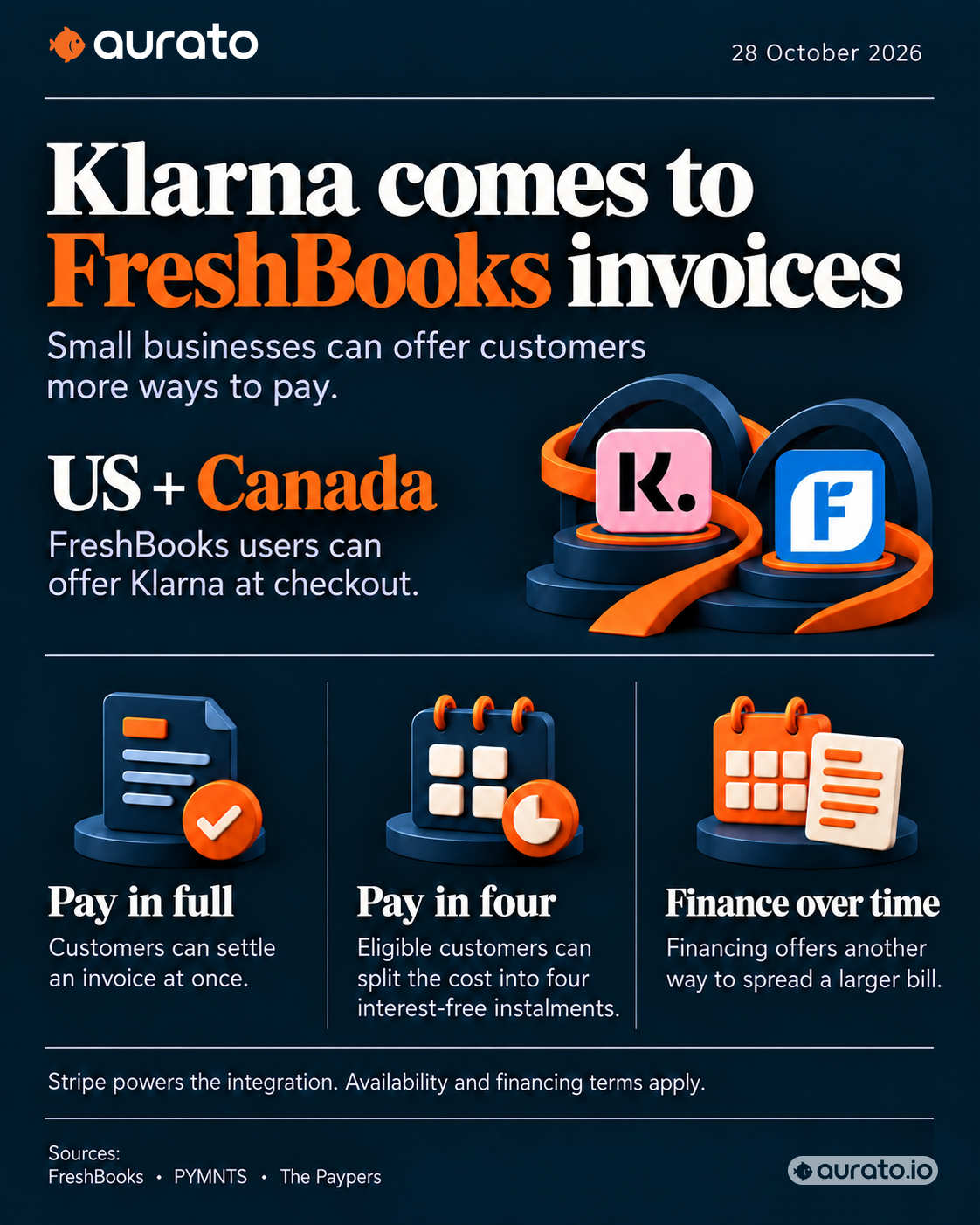
 Klarna is available in FreshBooks’ invoicing and payment flows for users in the
 United States and
 Canada. The integration is powered by
 Stripe, and the companies say merchants do not need additional setup to offer the payment options to their customers.
Customers can pay in full, use four interest-free instalments or finance a purchase over time. The companies describe the offering for service-based small businesses and solopreneurs who send invoices for work rather than relying only on a conventional online shop.
A choice at the point of payment
For a business sending an invoice, adding a payment choice to a familiar workflow could reduce the need to direct customers to a separate financing process. A customer facing a larger bill can compare the available options at the moment they decide how to pay.
The value to a merchant depends on the whole experience: whether the option appears for the relevant invoice, whether the customer qualifies, and how easily the resulting payment can be reconciled. Offering a choice alone does not establish that more invoices will be paid or that revenue will rise.
Eligibility and terms remain important
The companies describe a choice between full payment, four interest-free instalments and financing over time. They do not publish a complete schedule of financing rates, eligibility criteria or merchant fees in the partnership announcement, so users should check the terms presented for their own transaction.
FreshBooks says its users can process and reconcile payments within their existing software. The companies discuss more predictable cash flow, but the announcement does not provide a measured before-and-after study of payment speed or business revenue for this integration.
What businesses should check
Businesses considering the option should confirm availability for their account, invoice and customer, as well as settlement timing, fees, refunds and support responsibilities. Customers should review any financing costs and payment schedule before choosing to spread a bill.
A useful next test is whether the option helps customers complete payments without creating extra reconciliation or support work. Businesses can compare actual outcomes against their existing invoice process before drawing conclusions about its value.