A payment step inside Claude Duet
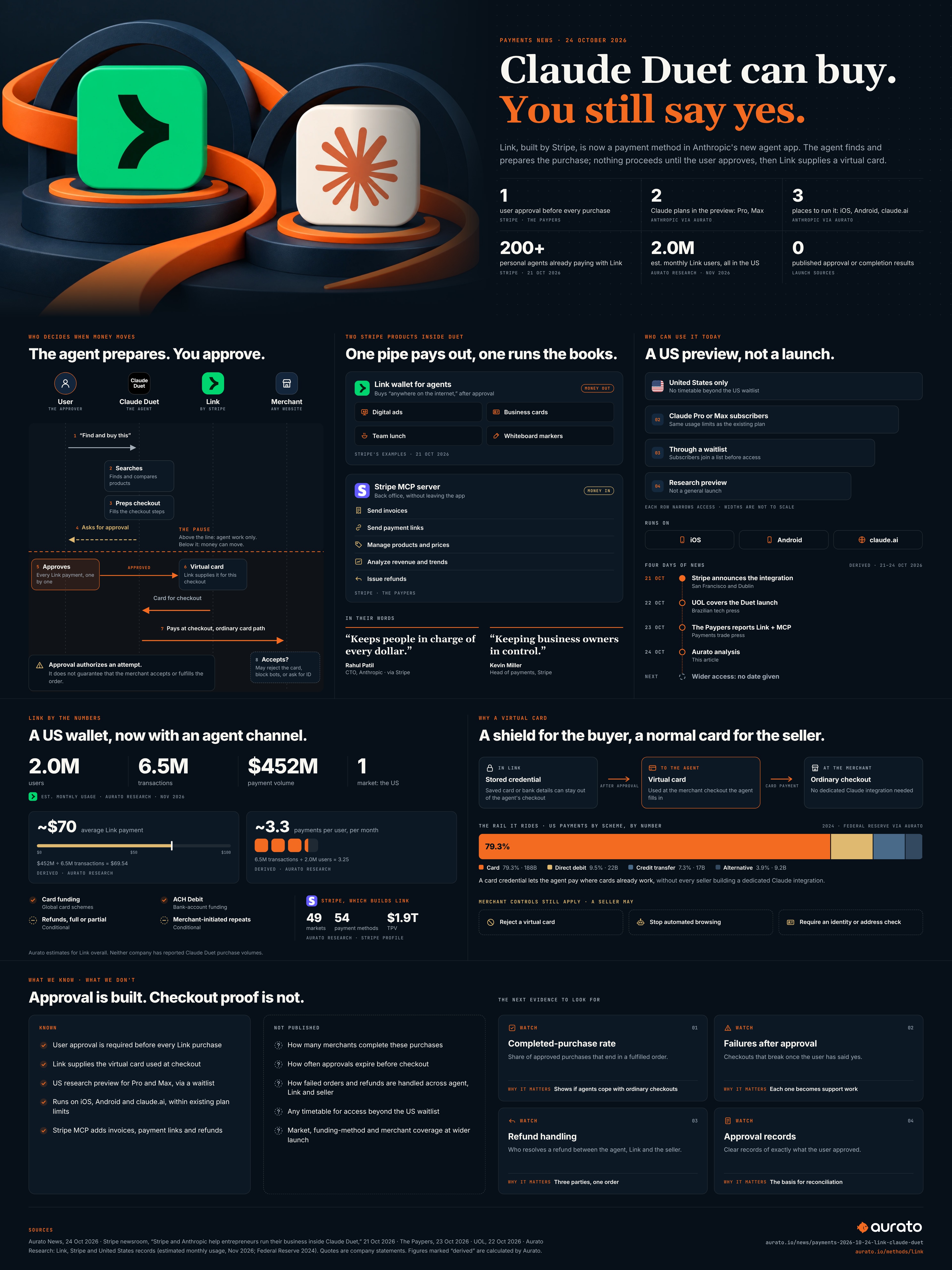
 Link is now available as a payment method inside Claude Duet, Anthropic’s new agent app for professionals and small-business owners. A user can ask the agent to find and buy an item, but the purchase does not proceed until the user approves it. Link then supplies the virtual card used at checkout.
Claude Duet opened as a research preview for  United States Pro and Max subscribers through a waitlist. Anthropic says the app is available on iOS, Android and claude.ai, with the same usage limits as the subscriber’s existing plan.
Approval changes the agent’s role
The useful distinction is who decides when money moves. Claude Duet may search, compare and prepare a checkout, while the user remains the final authoriser for every Link payment. That creates a clear pause between an agent’s recommendation and an actual charge.
For customers, a virtual card can keep the stored funding credential away from the merchant checkout used by the agent. For merchants, the transaction still arrives through an ordinary online payment path. That could widen where an agent can shop without requiring every seller to build a dedicated Claude integration.
A preview is not proven acceptance
The launch materials do not show how many merchants complete these purchases, how often approvals expire or how failed orders and refunds are handled across the agent, Link and the seller. They also do not provide a timetable for access beyond the United States waitlist.
Merchant controls still matter. A seller may reject a virtual card, stop automated browsing or require an identity or address check that the agent cannot complete. Approval by the user therefore authorises an attempt; it does not guarantee that a merchant accepts or fulfils the order.
What to watch next
The next evidence should include completed-purchase rates, checkout failures after approval, refund handling and clear records showing what the user approved. Those measures would tell businesses whether the design reduces routine buying work without creating new reconciliation or support problems.
Broader availability would also need precise market, funding-method and merchant coverage. If Link can preserve explicit approval while working across common checkout flows, it could become a practical payment layer for agents. Until then, this is a controlled United States preview rather than a generally available way to delegate spending.