A single connection for local commerce
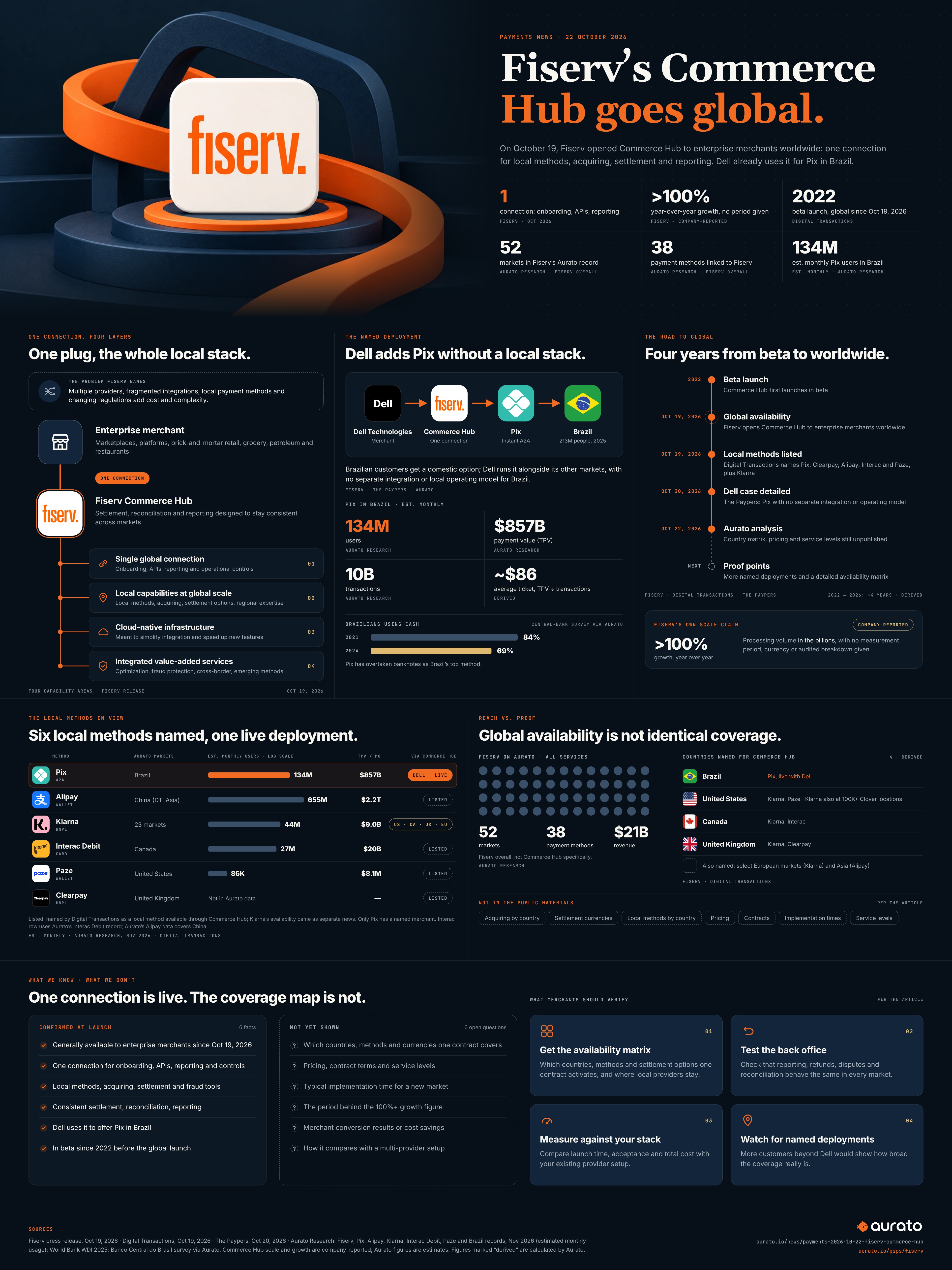
 Fiserv says Commerce Hub is now globally available to enterprise merchants. One connection covers onboarding, APIs, reporting and operational controls for its merchant services, with local methods, acquiring, settlement, optimisation and fraud tools. Settlement, reconciliation and reporting are designed to remain consistent across markets.
Dell Technologies is the named example. It uses Commerce Hub to offer  Pix in
 Brazil, showing how a multinational can add a domestic method without a separate local operating model. Fiserv says the platform handles processing volumes in the billions and is growing more than 100% year on year, but gives no measurement period or audited breakdown.
The practical value is operational consistency
For a merchant entering another country, accepting a familiar local method is only part of the job. The payment also has to fit fraud controls, settlement, refunds and reconciliation. A shared platform can reduce the connections and processes teams maintain.
Pix makes the proposition tangible: Brazilian customers get a domestic option while Dell manages it alongside other markets. The benefit depends on whether shared controls actually shorten launch work and daily exception handling.
Global availability does not mean identical coverage
The public materials do not list supported acquiring services, settlement currencies or local methods by country. They also omit pricing, contracts, implementation times and service levels. Global availability therefore does not prove that every capability is offered everywhere on the same terms.
Processing scale and growth are Fiserv figures. The sources publish no merchant conversion results, cost savings or comparison with a multi-provider setup. Dell’s Pix deployment proves a use case, not a performance benchmark.
What merchants should verify next
Useful next evidence would include a detailed availability matrix and more named deployments. Merchants should compare which countries, methods and settlement options one contract activates—and where local providers remain necessary.
Teams should test whether reporting, refunds, disputes and reconciliation behave consistently across markets, then measure launch time, acceptance and total cost against their existing stack. That will show whether Commerce Hub simplifies expansion in practice.