What changes on 31 October
 Samsung Pay is set to become available through
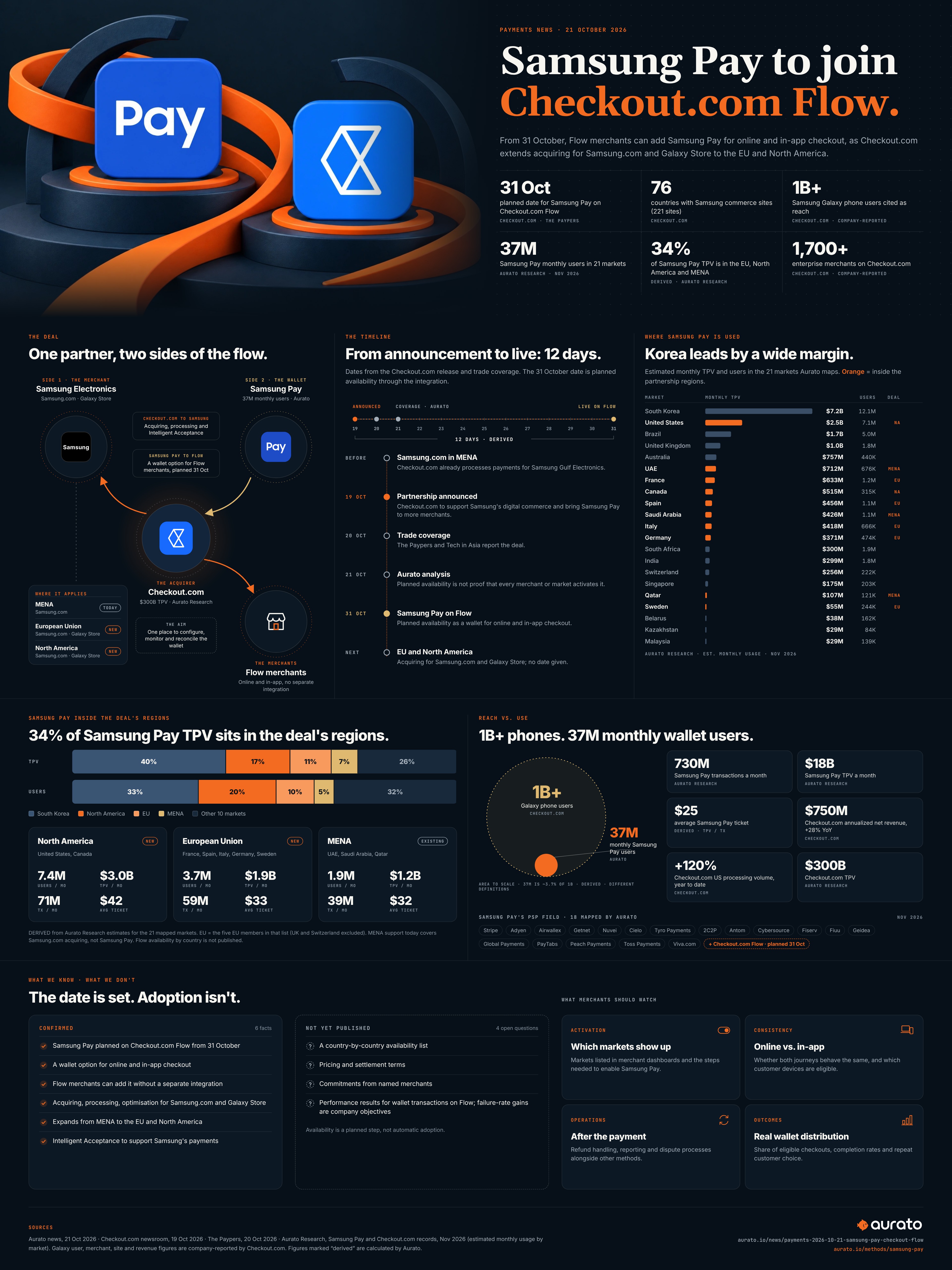
 Checkout.com’s low-code Flow integration on 31 October. Merchants using Flow would gain another wallet option for online and in-app checkout. The stated date describes planned availability through the integration; it does not mean every merchant account or market will switch the method on that day.
The agreement also broadens Checkout.com’s role inside Samsung Electronics’ commerce estate. Its acquiring, processing and optimisation services are expected to extend from existing Samsung.com support in the Middle East and North Africa to Samsung.com and Galaxy Store environments in the European Union and North America.
A distribution route for the wallet
For Samsung Pay, joining a PSP’s existing integration is a distribution move. Flow merchants may be able to add the wallet without building a separate payment stack, provided the method is enabled in their market and fits the checkout journey they operate.
For Checkout.com, the arrangement joins two sides of the flow: it supports Samsung’s commerce while preparing to distribute Samsung Pay to other merchants. The outcome would be one place to configure the wallet, monitor performance and reconcile transactions alongside other methods.
Availability is not automatic adoption
The launch point for Samsung Pay on Flow is not evidence of universal activation. The public materials do not provide a country-by-country availability list, pricing, settlement terms or commitments from named merchants. They also do not publish performance results for wallet transactions processed through the integration.
Checkout.com says its Intelligent Acceptance tools will support Samsung’s payment infrastructure. Any improvements in reliability or failed-payment rates remain company objectives until comparable results are published for the relevant markets and checkout paths.
What merchants should watch
Useful early signals will be the markets shown in merchant dashboards, the steps required to enable Samsung Pay and whether online and in-app experiences behave consistently. Merchants should also check refund handling, reporting, dispute processes and eligible customer devices.
A later assessment should focus on activation, share of eligible checkouts, completion rates and repeat customer choice. Those measures will show whether the partnership produces meaningful wallet distribution rather than simply adding another method to a menu.