A mobile wallet gets a physical front door
 stc pay
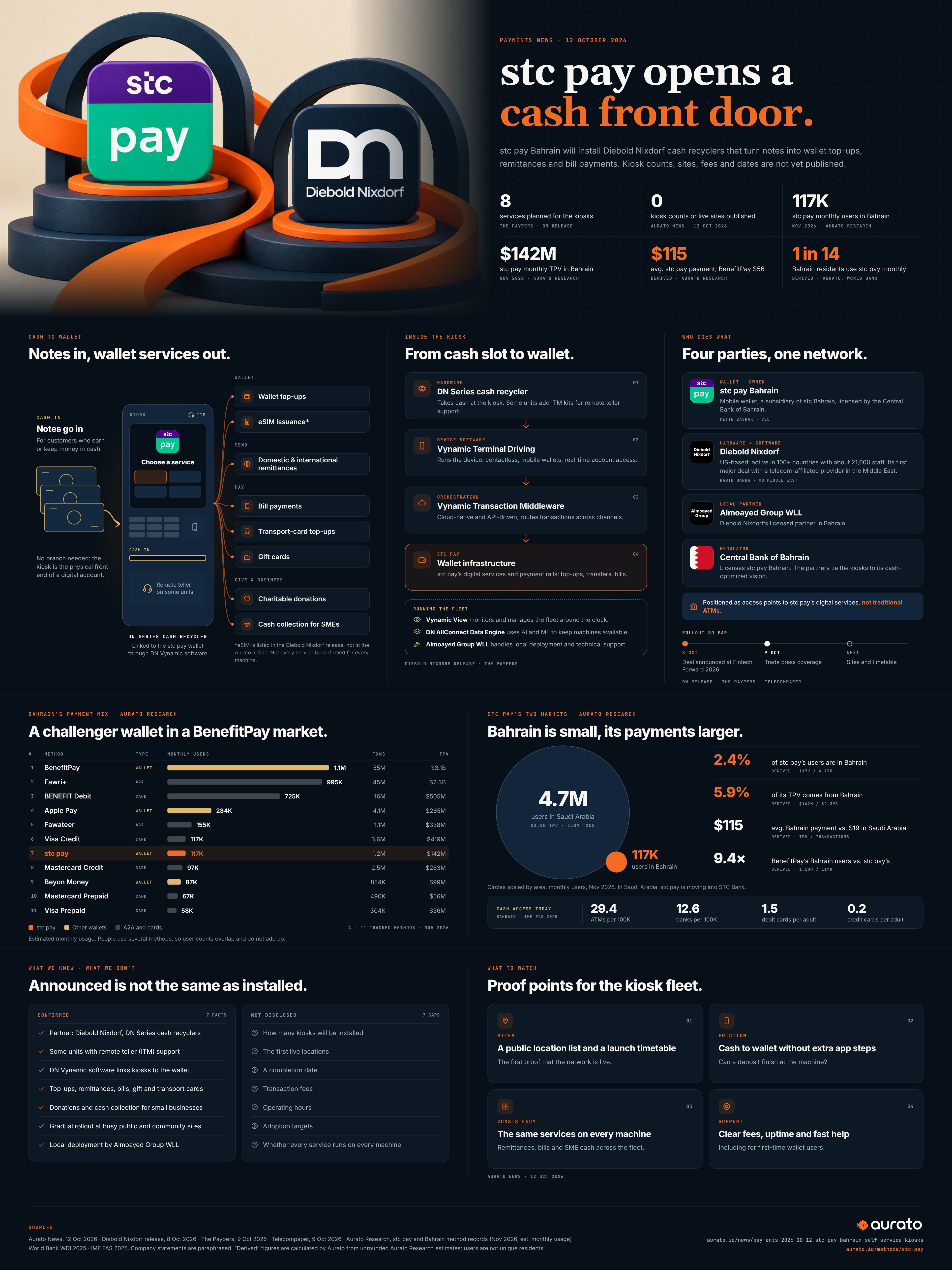
 Bahrain is working with Diebold Nixdorf on its first physical self-service channel. DN Series cash recyclers, some with remote teller support, will connect to the wallet’s payment infrastructure through DN Vynamic software.
Planned services include wallet top-ups, domestic and international remittances, bill payments, gift cards, transport-card top-ups, donations and cash collection for small businesses. Regional reporting describes a gradual rollout at busy public and community locations.
The kiosks are intended to bridge cash and the mobile wallet, offering access to digital services when a smartphone-only journey is inconvenient or inaccessible.
Why a digital wallet is moving into hardware
The rollout uses cash-accepting hardware to bring people into a digital payment account. That could make the wallet more useful for customers who earn or manage some money in cash, with transfers and bill payments connected to the same service.
For stc pay, physical kiosks could also extend reach without building a traditional branch network. The customer experience will depend less on the number of app features and more on basics such as convenient locations, machine uptime, fee transparency and fast help when a transaction fails.
The rollout is announced, not complete
The announcement does not specify how many kiosks will be installed, the first live locations or a completion date. It also does not publish transaction fees, operating hours or adoption targets. The project should therefore be read as a planned deployment, not evidence that the full network is already available.
The available coverage describes a broad menu of planned services, but it does not confirm that every service will launch on every machine at the same time. Actual availability may differ by location and rollout phase.
What to watch next
The first useful proof point will be a public location list and a clear launch timetable. After that, watch whether customers can complete cash-to-wallet transactions without extra app friction, and whether remittances, bill payments and small-business cash collection are consistently available across the fleet.
The harder test is whether stc pay can make its kiosks as understandable and dependable as its app, including for first-time wallet users. Physical access should extend the service without recreating a traditional bank branch.
Related
Sources
- Diebold Nixdorf Enables stc pay Bahrain to Bridge Digital and Physical Financial ServicesDiebold Nixdorf
- stc pay Bahrain deploys Diebold Nixdorf cash recyclersThe Paypers
- STC Pay Bahrain partners Diebold Nixdorf to launch self-service kiosksTelecompaper
- stc pay Bahrain launches self-service kiosks with Diebold NixdorfGCC Business News