What happened at the counter
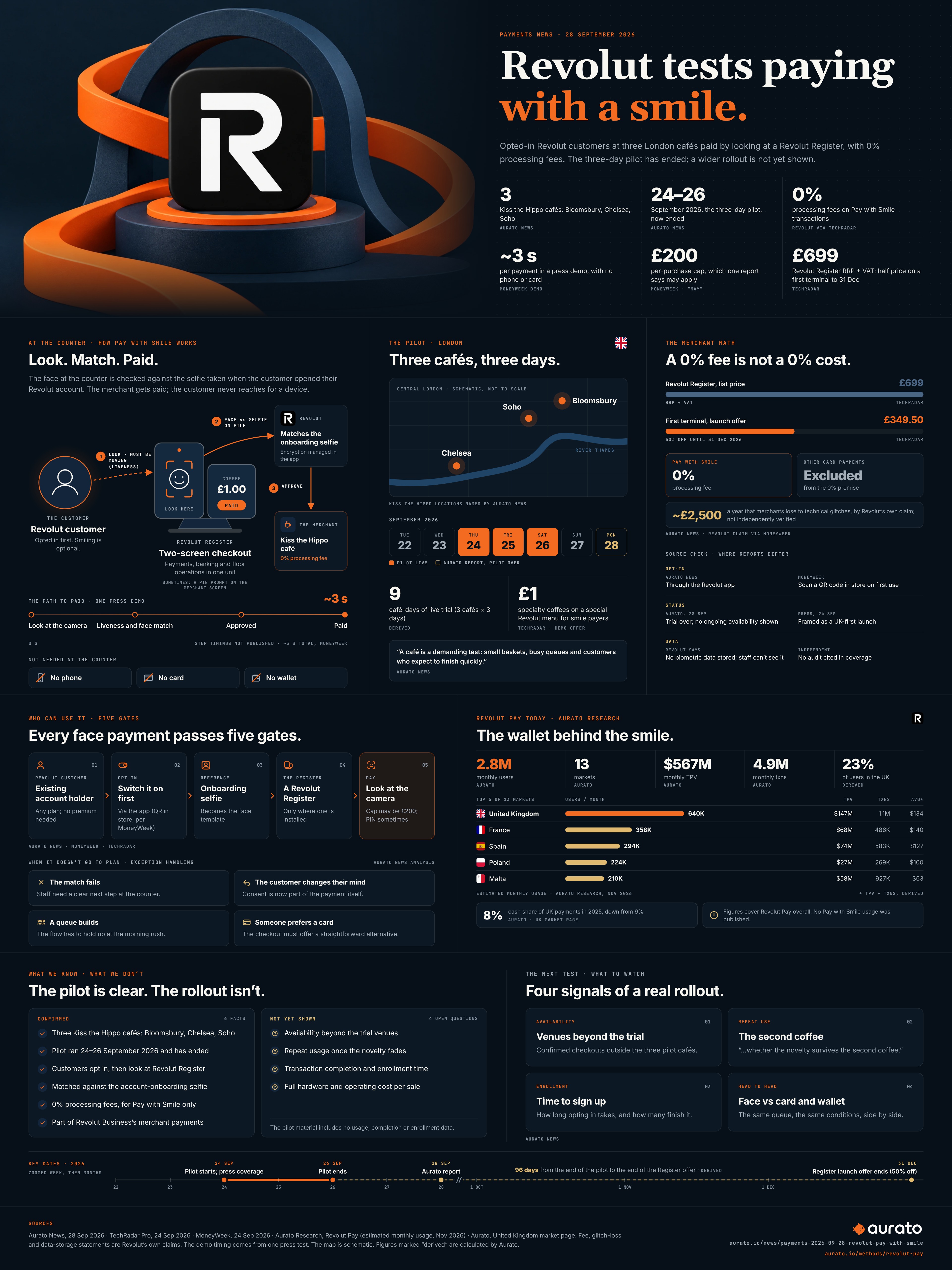
The three-day pilot ran at Kiss the Hippo cafés in Bloomsbury, Chelsea and Soho. Authentication compared the customer with the selfie used during account onboarding. The announced trial ran from 24–26 September and has ended; it does not establish ongoing availability at those venues.
 Revolut Business presented the pilot as part of its merchant payments offering. The zero processing-fee promise applies to Pay with Smile, rather than every card payment a merchant accepts.
Why merchants should care
The interesting question is whether a payment provider can turn its existing consumer relationship into a useful in-store payment method. A café is a demanding test: small baskets, busy queues and customers who expect to finish quickly.
For merchants, the appeal combines a different checkout interaction with a different price proposition. But paying without a phone is valuable only if enrolling is easy and customers feel comfortable choosing it. The till must also offer a straightforward alternative when someone prefers a card.
A facial check also makes consent and exception handling part of the payment experience. Staff need to know what to do when the comparison fails, when a customer changes their mind or when a queue builds. Those details are as important as the speed of a successful demonstration.
The next test
Before treating this as a merchant rollout, look for confirmed availability beyond the trial venues. More useful evidence would include repeat usage, transaction completion, and the time needed to enrol. Those measures would show whether the novelty survives the second coffee.
A low processing fee should also be assessed alongside hardware and operating costs. For a hospitality business, the relevant comparison is the whole checkout experience and total cost of accepting a payment.
For a merchant considering a similar setup, a useful trial would compare the face-payment path with existing card and wallet options under the same conditions. That would help distinguish repeatable convenience from interest in trying a new way to pay.